
Toft Monica Duffy (Professor Of International Politics And Director Of The Center For Strategic Studies Professor Of International Politics And Director Of The Center For Strategic Studies Fletcher School Of Law And Diplomacy Tuft University)
Toft Monica Duffy (Professor Of International Politics And Director Of The Center For Strategic Studies Professor Of International Politics And Director Of The Center For Strategic Studies Fletcher School Of Law And Diplomacy Tuft University) - Civil
Toft Monica Duffy (Professor Of International Politics And Director Of The Center For Strategic Studies Professor Of International Politics And Director Of The Center For Strategic Studies Fletcher School Of Law And Diplomacy Tuft University) - Civil
Books
Regular price
$14.17 USD
Regular price
Sale price
$14.17 USD
Unit price
per
Shipping calculated at checkout.
Couldn't load pickup availability
Binding: Paperback
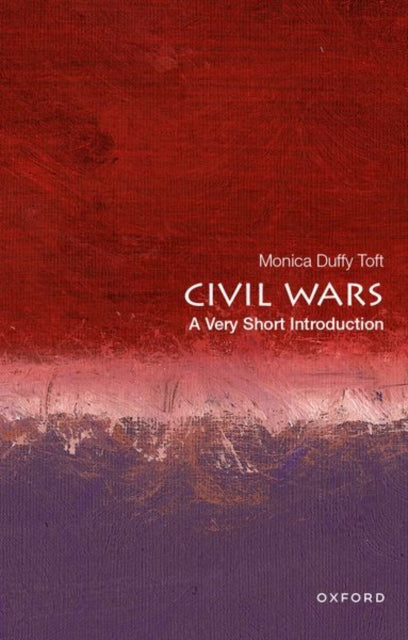
Description: Civil wars are nasty brutish and long. Monica Duffy Toft introduces this complex and timely topic. Civil wars are the most common form of large - scale political violence. In the past thirty years the study of civil wars has been one of the largest growing segments of the international relations field. Their causes are complex ranging from fights over access to housing jobs and arable land or other resources to political contests over offices rights and representation. Because civil wars tend to drag on motives and relevant actors shift. Groups form collapse coalesce align and realign and then fight amongst themselves. Governments themselves change through elections coups military defeats or revolutions. Understanding the origins of civil wars and their trajectories therefore demands some appreciation of the economic political social cultural and geographic order of societies. If there is one factor that best predicts why a civil war erupts it is a prior civil war. That is why knowledge of a country's history of political violence and associated narratives about who is to blame and why are critical to understanding where a civil war might next occur. Do insurgents deserve the title of freedom fighters or are they simply criminals or terrorists? If contested resources can be readily divided how is it that seemingly rational actors so often treat them as indivisible? What is it about identity or identities that seem so irreconcilable that they so often lead to an escalation to violence - - including violence against noncombatants - - and the collapse of governments? Theories about the causes the nature and the termination of civil wars have been adapted from both the international relations and comparative politics disciplines and there are now many databases cataloguing hundreds of cases of civil war that enable sophisticated statistical analysis and formal modeling. As a result we now have a better understanding of the conditions under which civil wars generally emerge how the fighting evolves (sometimes involving interventions by external actors) and how civil wars end. However historical understanding - - the human dimensions - - remain every bit as critical. This Very Short Introduction explores current debates on civil wars and how the reasons for fighting (and the nature of belligerents themselves) are changing.
Title: Civil Wars: A Very Short Introduction
Author(s): Toft Monica Duffy (Professor Of International Politics And Director Of The Center For Strategic Studies Professor Of International Politics And Director Of The Center For Strategic Studies Fletcher School Of Law And Diplomacy Tuft University)
Publisher: Oxford University Press Inc
Barcode: 9780197575864
Pages: 168 Pages, 10 B/W Illustrations
Publication Date: 8/29/2024
Series: VERY SHORT INTRODUCTIONS
Category: Theory Of Warfare & Military Science
Description: Civil wars are nasty brutish and long. Monica Duffy Toft introduces this complex and timely topic. Civil wars are the most common form of large - scale political violence. In the past thirty years the study of civil wars has been one of the largest growing segments of the international relations field. Their causes are complex ranging from fights over access to housing jobs and arable land or other resources to political contests over offices rights and representation. Because civil wars tend to drag on motives and relevant actors shift. Groups form collapse coalesce align and realign and then fight amongst themselves. Governments themselves change through elections coups military defeats or revolutions. Understanding the origins of civil wars and their trajectories therefore demands some appreciation of the economic political social cultural and geographic order of societies. If there is one factor that best predicts why a civil war erupts it is a prior civil war. That is why knowledge of a country's history of political violence and associated narratives about who is to blame and why are critical to understanding where a civil war might next occur. Do insurgents deserve the title of freedom fighters or are they simply criminals or terrorists? If contested resources can be readily divided how is it that seemingly rational actors so often treat them as indivisible? What is it about identity or identities that seem so irreconcilable that they so often lead to an escalation to violence - - including violence against noncombatants - - and the collapse of governments? Theories about the causes the nature and the termination of civil wars have been adapted from both the international relations and comparative politics disciplines and there are now many databases cataloguing hundreds of cases of civil war that enable sophisticated statistical analysis and formal modeling. As a result we now have a better understanding of the conditions under which civil wars generally emerge how the fighting evolves (sometimes involving interventions by external actors) and how civil wars end. However historical understanding - - the human dimensions - - remain every bit as critical. This Very Short Introduction explores current debates on civil wars and how the reasons for fighting (and the nature of belligerents themselves) are changing.
Title: Civil Wars: A Very Short Introduction
Author(s): Toft Monica Duffy (Professor Of International Politics And Director Of The Center For Strategic Studies Professor Of International Politics And Director Of The Center For Strategic Studies Fletcher School Of Law And Diplomacy Tuft University)
Publisher: Oxford University Press Inc
Barcode: 9780197575864
Pages: 168 Pages, 10 B/W Illustrations
Publication Date: 8/29/2024
Series: VERY SHORT INTRODUCTIONS
Category: Theory Of Warfare & Military Science